
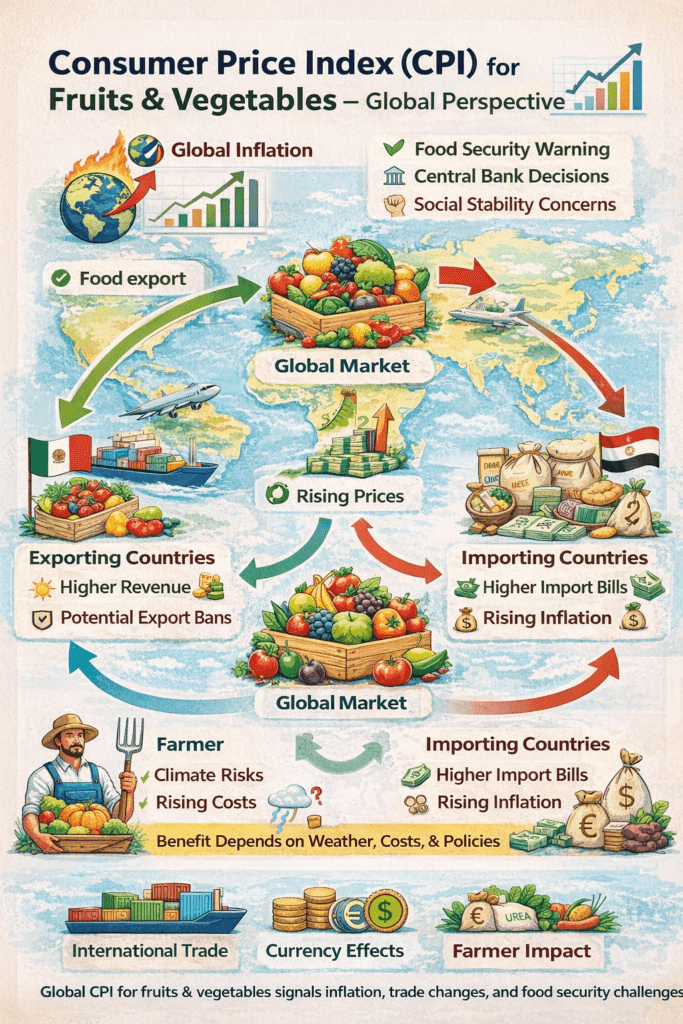
Globally, CPI for fruits and vegetables measures how prices of fresh produce change across countries and how those changes affect inflation, food security, and economies worldwide.
1️⃣ How Different Countries Measure It
Almost every country tracks food inflation, but methods differ:
- 🇺🇸 United States – The Bureau of Labor Statistics tracks fresh fruits and vegetables under the Food-at-Home index.
- 🇪🇺 European Union – Eurostat compiles food price data for member countries.
- 🇮🇳 India – Ministry of Statistics and Programme Implementation tracks vegetables and fruits separately because they are highly volatile.
- 🌐 Globally – Food and Agriculture Organization monitors global food price trends through the FAO Food Price Index.
While the methodology varies, the principle is the same: track retail prices over time and compare with a base year.
2️⃣ Why Fruits & Vegetables Are More Volatile Worldwide
Fresh produce prices fluctuate more than other goods because of:
🌦 Climate Change
Droughts in Africa, floods in South Asia, heatwaves in Europe — all reduce crop yields.
🚢 Global Supply Chains
Disruptions like:
- COVID-19 lockdowns
- War (e.g., Ukraine crisis affecting logistics & fertilizer supply)
- Shipping container shortages
⛽ Energy & Transport Costs
Fuel price increases raise transportation and cold storage costs globally.
🌍 Trade Policies
Export bans (like on onions or tomatoes) can spike prices in importing countries.
3️⃣ Developed vs Developing Countries
🇺🇸 🇪🇺 Developed Economies
- Fruits & vegetables form a smaller share of total CPI (because services dominate spending).
- Price spikes hurt but don’t dominate overall inflation.
🌍 Developing Economies
- Food makes up 30–50% or more of household spending.
- A vegetable price surge can significantly increase total inflation.
- Poor households are most affected.
Example: A 20% vegetable price rise in a low-income country may push overall inflation sharply higher compared to the same increase in the U.S.
4️⃣ Global Trends in Recent Years
Globally, fruit and vegetable prices have been influenced by:
- Post-pandemic supply recovery
- Climate shocks (heatwaves, El Niño)
- Rising fertilizer costs
- Currency depreciation in emerging markets
This has made food inflation one of the biggest drivers of headline inflation worldwide.
5️⃣ Why It Matters Globally
📌 Food Security
High produce prices increase hunger risk in vulnerable countries.
📌 Central Bank Policy
If food inflation persists, central banks may raise interest rates.
📌 Political Stability
Sharp increases in food prices have historically triggered social unrest in several regions.
🌎 In Simple Terms
Globally, CPI for fruits and vegetables acts as:
- A climate indicator
- A supply chain stress signal
- A food security warning
- A major inflation driver in developing nations
Because fresh food is essential everywhere, even small price changes can have large economic and social impacts worldwide.