
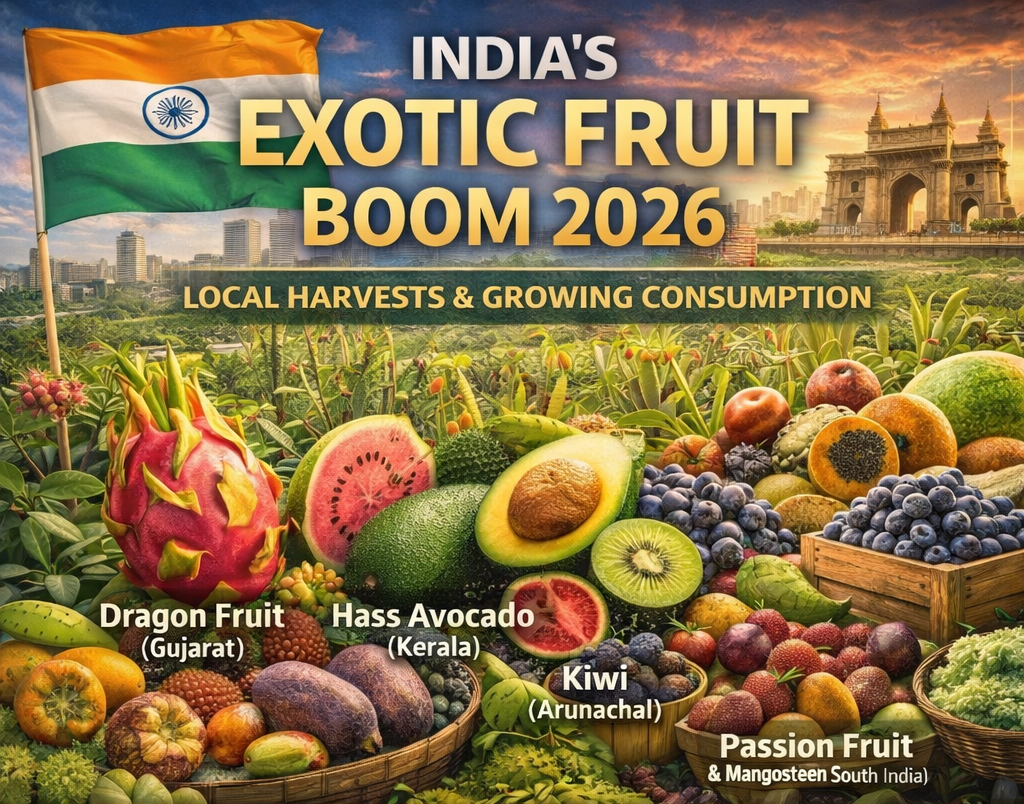
In India, the “exotic” fruit market is currently undergoing a massive transformation. What was once a niche segment for luxury hotels is now a staple in middle-class urban households, driven by social media trends (like “Avo-toast” and smoothie bowls) and a major push toward local cultivation.
As of February 2026, here is the breakdown of the exotic fruit landscape in India:
1. Availability: The Rise of “Make in India” Fruits
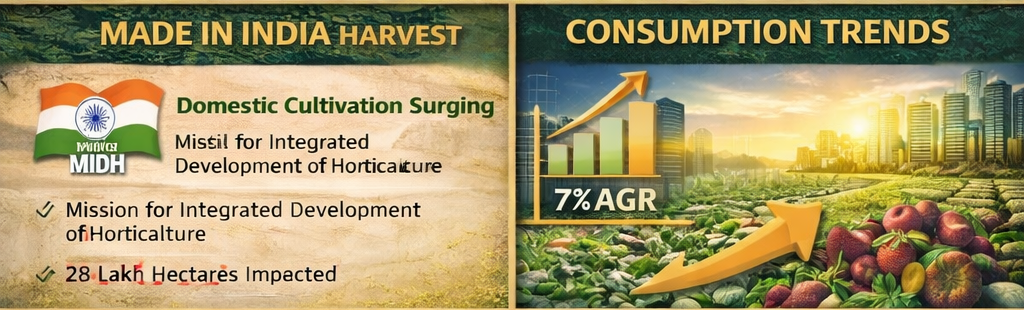
India is no longer solely dependent on imports. The government’s Mission for Integrated Development of Horticulture (MIDH) has successfully brought over 28 lakh hectares under exotic fruit cultivation.
- Dragon Fruit (Kamalam): Now widely grown in Gujarat, Karnataka, and Maharashtra. Availability is year-round due to a mix of domestic harvests and imports from Vietnam.
- Avocados: While Hass avocados are still largely imported from Tanzania, Kenya with premium grade from New Zealand and Australia, Indian-grown varieties from Kerala, Tamil Nadu, and Sikkim are becoming common in local markets.
- Kiwi: Heavy competition between imported Zespri (New Zealand) kiwis and locally grown ones from Arunachal Pradesh and Himachal Pradesh.
- Others: Passion fruit (North East), Mangosteen, and Rambutan (South India) are seeing a surge in seasonal availability.
2. Consumption Trends
- Health as a Status Symbol: Consumption is growing at a CAGR of ~7%. Fruits like blueberries and avocados are being marketed as “superfoods,” leading to high demand in Tier-1 cities (Mumbai, Delhi, Bangalore).
- The “Convenience” Factor: Online grocery platforms (Blinkit, Zepto, BigBasket) have made these fruits accessible in under 10 minutes, which has tripled the consumption rate among urban professionals.
- Dietary Shifts: A significant portion of health-conscious Indians are replacing traditional sweets with exotic fruit platters for gifting and daily snacks.
3. Price Trends (February 2026)
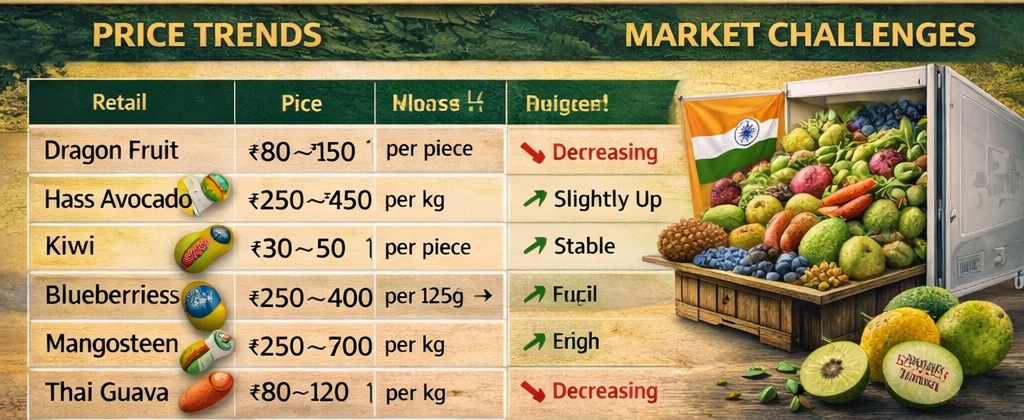
Prices are currently stable but remain 3–5x higher than local staples like bananas or guavas.
| Fruit | Est. Retail Price (₹) | Trend vs. 2025 |
|---|---|---|
|
Dragon Fruit (Red) |
₹80 – ₹150 per piece |
📉 Decreasing (due to high domestic yield) |
|
Avocado (Hass) |
₹250 – ₹450 per kg |
📈 Slightly Up (import logistics costs) |
|
Kiwi (Green) |
₹30 – ₹50 per piece |
↔️ Stable |
|
Blueberries |
₹250 – ₹400 per 125g box |
📈 High (peak demand) |
|
Mangosteen |
₹400 – ₹700 per kg |
📈 High (limited availability) |
|
Thai Guava |
₹80 – ₹120 per kg |
📉 Decreasing (mass local cultivation) |
4. Market Challenges
- The “Cold Chain” Gap: Despite high demand, nearly 20–25% of exotic fruits are lost due to poor refrigeration during transport within India.
- Price Sensitivity: While Tier-1 cities are buying, Tier-2 cities remain price-sensitive, often opting for “Indian-exotics” like Kinnow or Pomegranates over imported berries.